

★★★★☆ Difficulty Level: Expert
Species: Myrmecia brevinoda
**This ant species is capable of stinging and may cause allergic reactions in some individuals. Do not handle.**
Description:
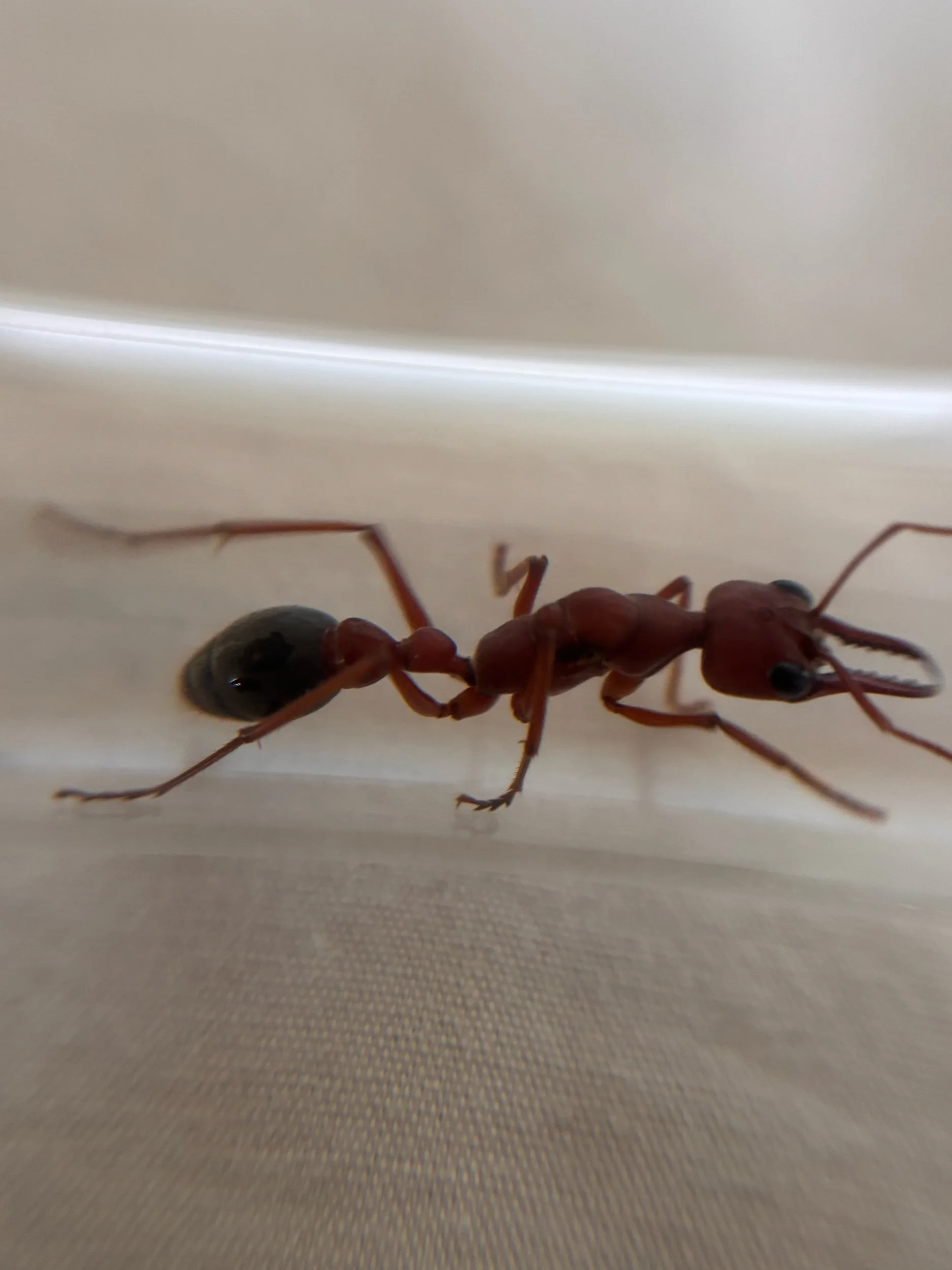
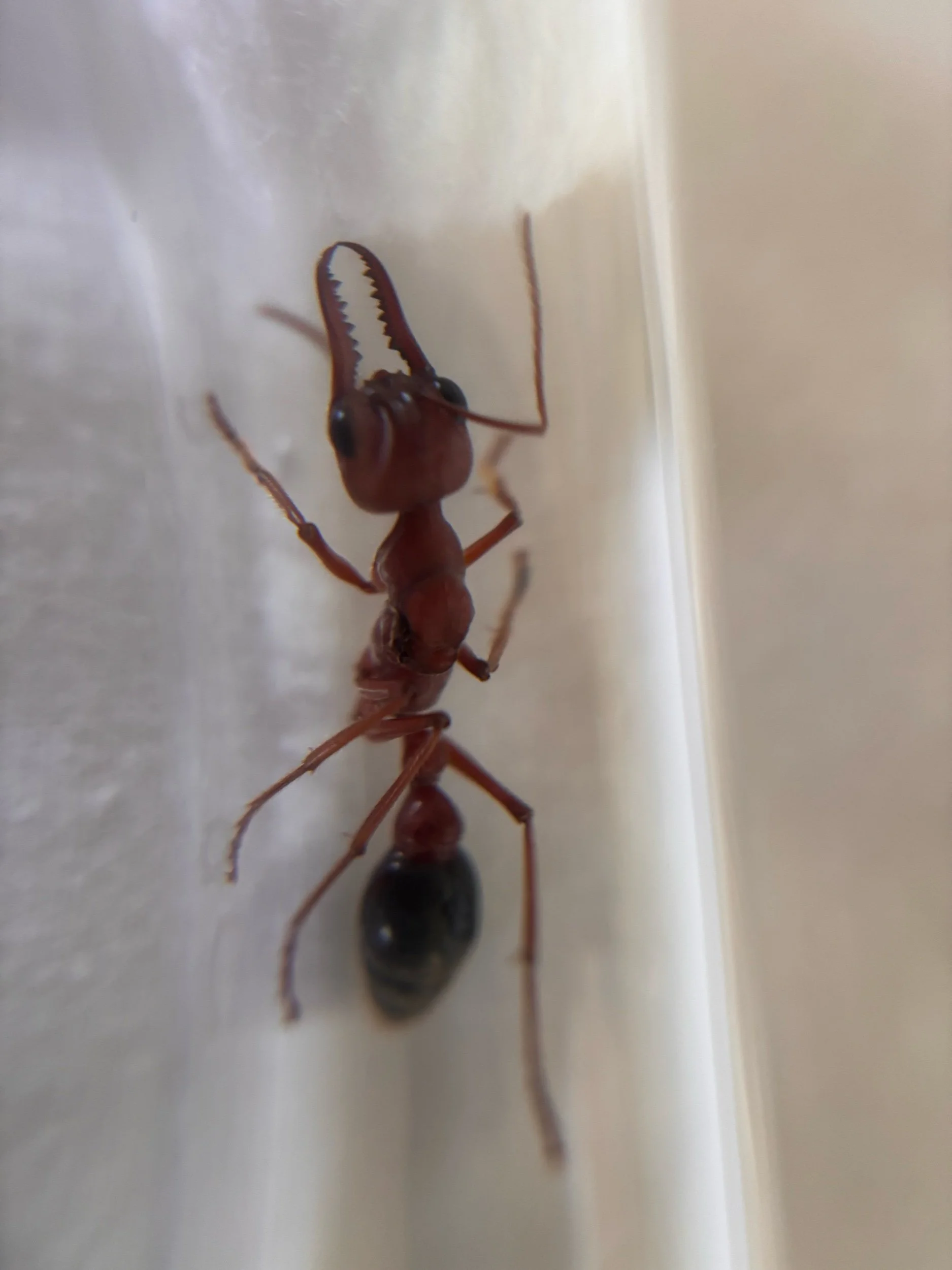
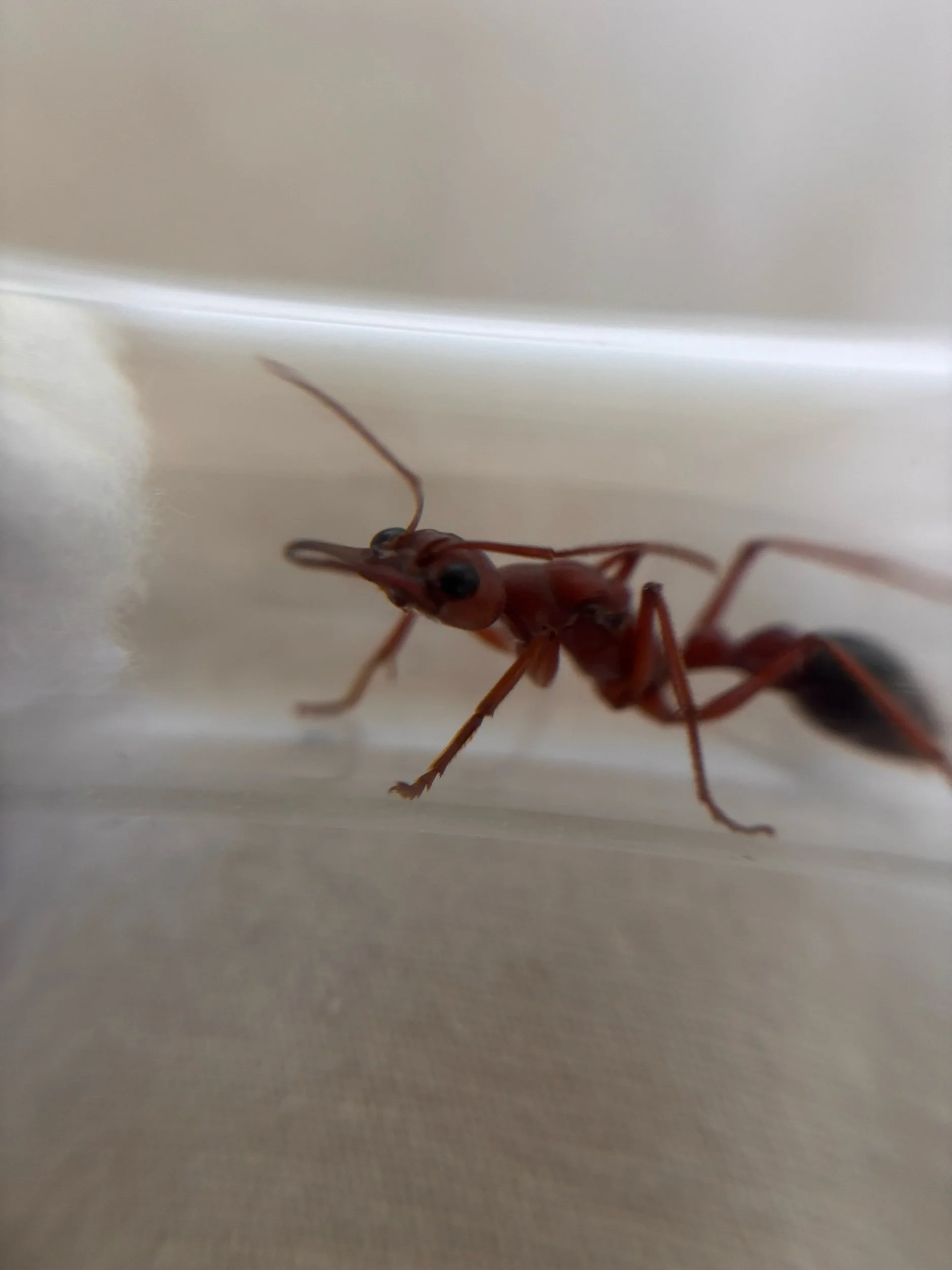
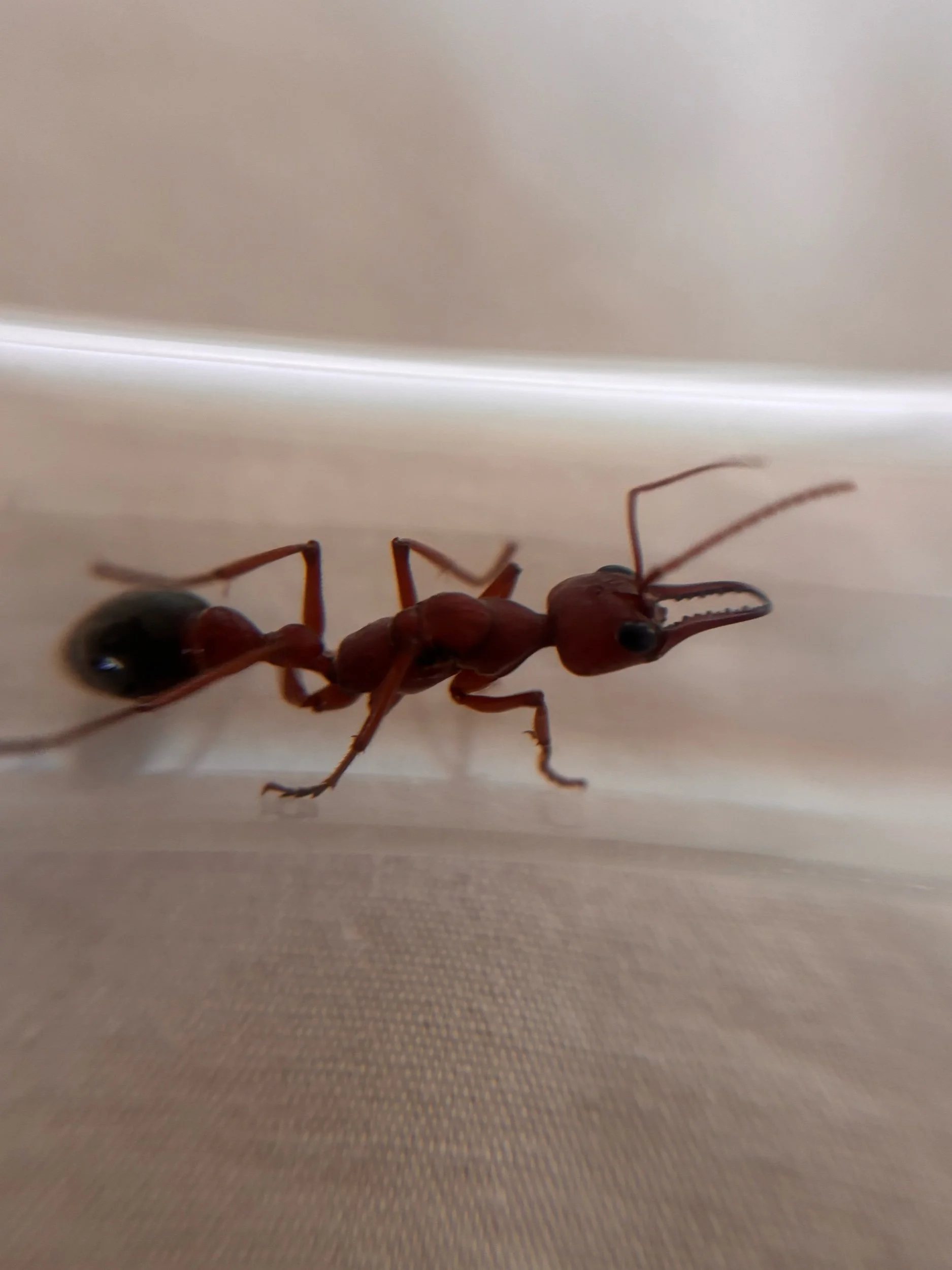
Myrmecia brevinoda is one of the largest and most formidable Australian bull ant species. Known for its powerful build, strong mandibles, and extremely potent sting, this species is both visually impressive and biologically fascinating. Workers are highly alert and rely heavily on their excellent vision when hunting, making them a striking predator and a standout species in advanced ant collections.
Keeping Experience:
Keeping Myrmecia brevinoda requires significant experience and strict safety precautions. Workers are large, fast, and highly defensive, capable of delivering an extremely painful sting. Colonies grow slowly but individuals are long-lived and highly active hunters. A secure, escape-proof setup and minimal disturbance are essential. This species is recommended only for expert keepers comfortable managing large stinging ants.
Quick Care Guide:
Colony Founding Type: Semi-claustral – queen requires feeding during founding
Worker Size: 18–24 mm
Queen Size: 26–32 mm
Humidity: Moderate (well-ventilated nest with dry areas)
Housing: Test tube setup → secure, escape-proof formicarium
Substrate: Sand or naturalistic Australian habitat setups recommended
Diet:
Carbohydrates: Always available once workers emerge
Protein: Insects 2–3× weekly
Colony Growth: Slow
Ideal For:
✔ Expert keepers
✔ Experienced handlers
✔ Secure display setups for large predatory ants
Guarantee:
Royal Ants is committed to providing healthy, high-quality ant colonies and queens to hobbyists and collectors. All queens are carefully inspected and shipped in optimal condition to ensure their wellbeing during transit. We guarantee that every queen is alive and in excellent health at the time of dispatch. In the unlikely event a queen arrives deceased, a refund will be issued upon receipt of clear photographic evidence on the day of delivery.
★★★★☆ Difficulty Level: Expert
Species: Myrmecia brevinoda
**This ant species is capable of stinging and may cause allergic reactions in some individuals. Do not handle.**
Description:
Myrmecia brevinoda is one of the largest and most formidable Australian bull ant species. Known for its powerful build, strong mandibles, and extremely potent sting, this species is both visually impressive and biologically fascinating. Workers are highly alert and rely heavily on their excellent vision when hunting, making them a striking predator and a standout species in advanced ant collections.
Keeping Experience:
Keeping Myrmecia brevinoda requires significant experience and strict safety precautions. Workers are large, fast, and highly defensive, capable of delivering an extremely painful sting. Colonies grow slowly but individuals are long-lived and highly active hunters. A secure, escape-proof setup and minimal disturbance are essential. This species is recommended only for expert keepers comfortable managing large stinging ants.
Quick Care Guide:
Colony Founding Type: Semi-claustral – queen requires feeding during founding
Worker Size: 18–24 mm
Queen Size: 26–32 mm
Humidity: Moderate (well-ventilated nest with dry areas)
Housing: Test tube setup → secure, escape-proof formicarium
Substrate: Sand or naturalistic Australian habitat setups recommended
Diet:
Carbohydrates: Always available once workers emerge
Protein: Insects 2–3× weekly
Colony Growth: Slow
Ideal For:
✔ Expert keepers
✔ Experienced handlers
✔ Secure display setups for large predatory ants
Guarantee:
Royal Ants is committed to providing healthy, high-quality ant colonies and queens to hobbyists and collectors. All queens are carefully inspected and shipped in optimal condition to ensure their wellbeing during transit. We guarantee that every queen is alive and in excellent health at the time of dispatch. In the unlikely event a queen arrives deceased, a refund will be issued upon receipt of clear photographic evidence on the day of delivery.